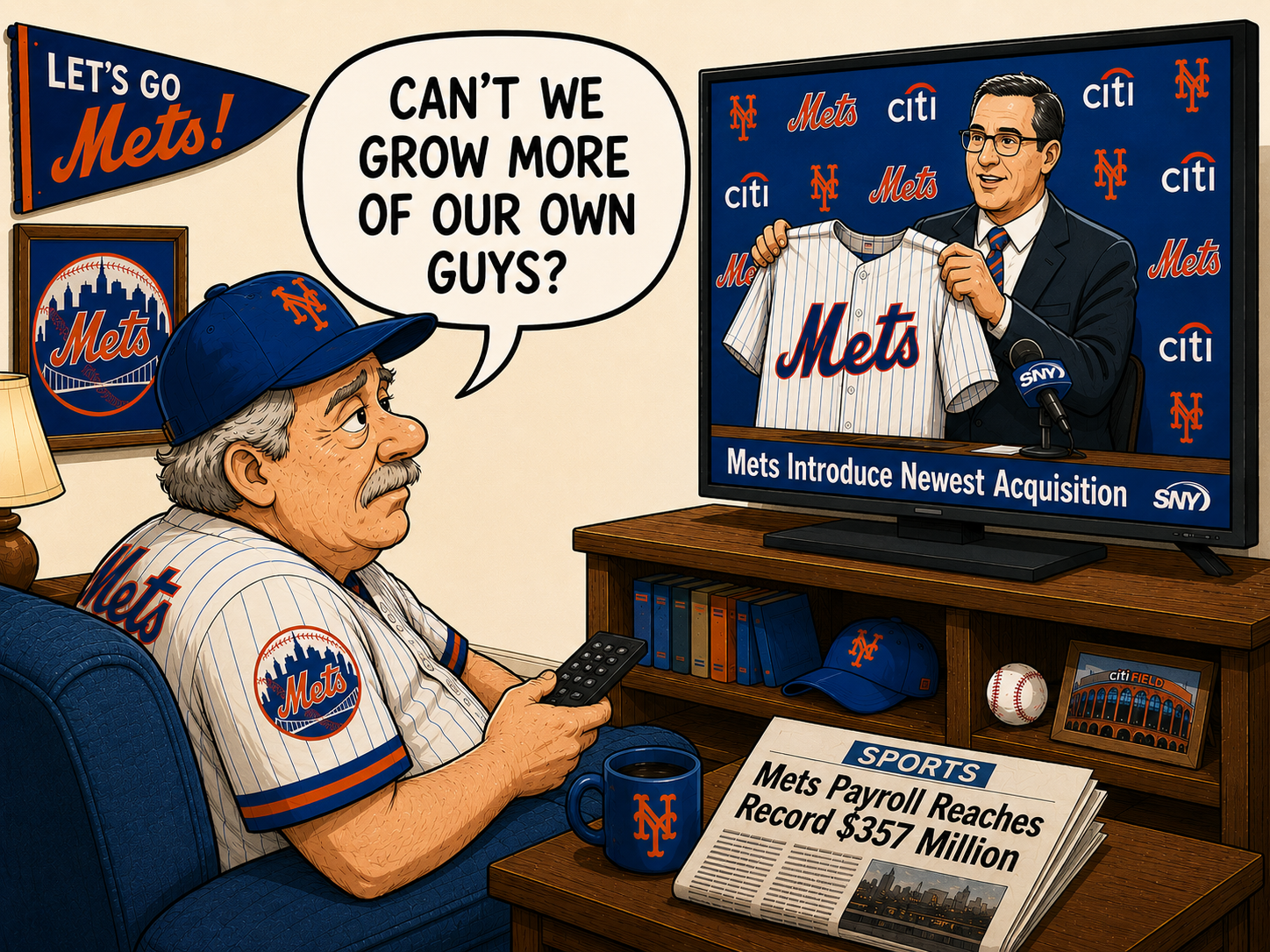
The Mets have never had more financial resources. Steve Cohen has shown a willingness to spend whatever it takes to improve the roster. But building a winner takes more than money. Free agency and trades are essential, but they can’t replace a farm system that consistently develops—and retains—major league talent.
The 2026 Mets have one of the highest payrolls in baseball. They’ve added stars through free agency and trades, yet they’ve spent much of the season well below .500 and out of the playoff race. At some point, it’s fair to ask whether the organization’s current formula is producing the results ownership and fans expect.
No organization builds an entire roster from within. Trades and free agency are essential parts of roster construction. The problem isn’t acquiring talent from outside the organization. It’s becoming too dependent on it because your own pipeline isn’t producing enough major league players.
Homegrown players do more than save money. They give a team depth, create competition for roster spots, and allow a front office to use free agency and trades to add the final pieces instead of rebuilding the roster every winter. They also give fans something every successful organization needs: the chance to watch players grow from prospects into major leaguers. When fans follow a player’s journey from the draft or the minor leagues to Citi Field, the connection is different. Those players don’t just become contributors—they become part of the team’s identity.
Homegrown talent only helps if enough of it stays home. Pete Crow-Armstrong is one of the best young players in baseball, but Cubs fans—not Mets fans—are watching him blossom. He isn’t the only reminder that developing talent is only part of the job. Building a winning organization also means keeping enough of those players to become the core of your next contender.
An organization needs the ability both to produce major league players and to acquire them, but when one side is doing most of the work, something is out of balance.
Steve Cohen’s willingness to spend is one of the Mets’ greatest advantages. But no owner, regardless of wealth, can guarantee a team’s success. Sustained success still depends on producing a steady stream of homegrown talent. Right now, the Mets haven’t produced enough of it.
It’s supposed to supply them.
The Mets have shown they can acquire stars. Now they have to build an organization that consistently produces them—and keeps enough of them in Queens to become the foundation of a winner.
Leave a Reply